

- B-102, Angol Industrial Estate, Belagavi,
Karnataka 590008, INDIA

1 ( Single ) Piece Ball Valves
We are Manufacturer, Supplier, Exporter of Socket End 1 ( Single ) Piece Ball Valves, Industrial Valves, Industrial Actuated Valves, Industrial Valve Actuators, Industrial Valve Accessories, Socket End Ball Valves and our setup is situated in Belgaum, Karnataka, India. We majorly target customers from ALL OVER INDIA.
These are widely used in industrial processes for controlling the flow of various fluids, including water (liquids), gases, and slurries. They are suitable for applications in Process Industries such as Oil And Gas Industries, Chemical Processing Industries, Pharmaceuticals, Food Industries, Beverage Industries, Pulp And Paper Industries, Steel Industries, Glass Manufacturing Industry, Fire Fighting, Water Treatment.
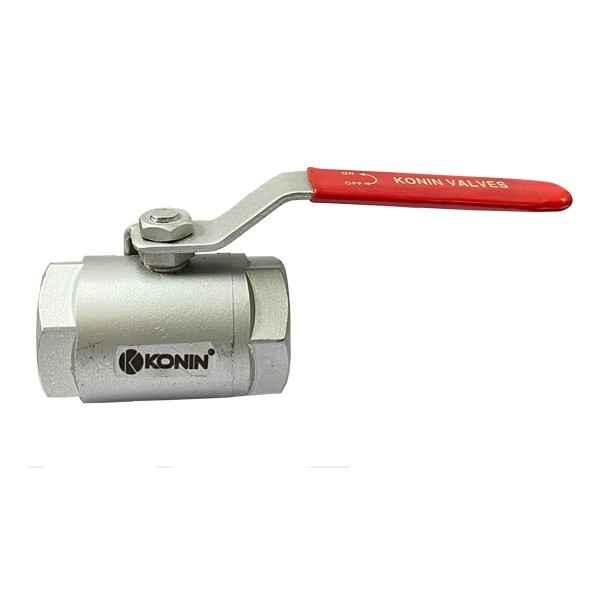
Single Piece Reduced and Full Bore
| Sizes in mm(Inch) | Pressure Rating |
|---|---|
| 15 (1/2") to 50 (2") | Class 800 |
| Design Std | BS EN ISO 17292 (BS 5351), API 6D |
| Face to Face (For Flanged End Only) | ASME B16.10, EN 558-2. |
| Testing Std. | API 598, BS:6755-1, EN 12266-1 |
| Body & Insert Material | WCB, CF8, CF8M, CS |
| Ball Material | CF8, CF8M. |
| Stem Material | 410, 304, 316 |
| Seat | PTFE / CFT / GFT / DELRIN / NYLON / PEEK / METAL |
| End Connection | Screwed, Socket |
| End Detail | For SE – BS:21 (Parallel/ Taper) / ASME B1.20.1 (NPT) Threads, SWE-B16.11. |
Enhanced Durability: The valve body is made from a single piece of material, eliminating the need for welds or joints. This design enhances the valve's durability and reliability.
Leak Prevention: The lack of seams or joints helps minimize the potential for leakage, making it ideal for applications requiring high reliability and tight shutoff.
Space Efficiency: Single-piece construction often results in a more compact and lightweight valve compared to multi-piece designs, which can be advantageous in space-constrained applications.
Increased Strength: The unified design can offer greater strength and resistance to mechanical stress, improving the valve's performance under high pressure and temperature conditions.
Reduced Upkeep: Fewer components and joints typically mean less maintenance is required, and the risk of component failure is reduced.
Long-Term Savings: Although single-piece ball valves might have a higher upfront cost compared to multi-piece valves, their reduced maintenance needs and lower risk of leakage can make them more cost-effective in the long run.
Operational Efficiency: The single-piece construction often provides smoother operation, as there are fewer internal parts that could cause friction or malfunction.